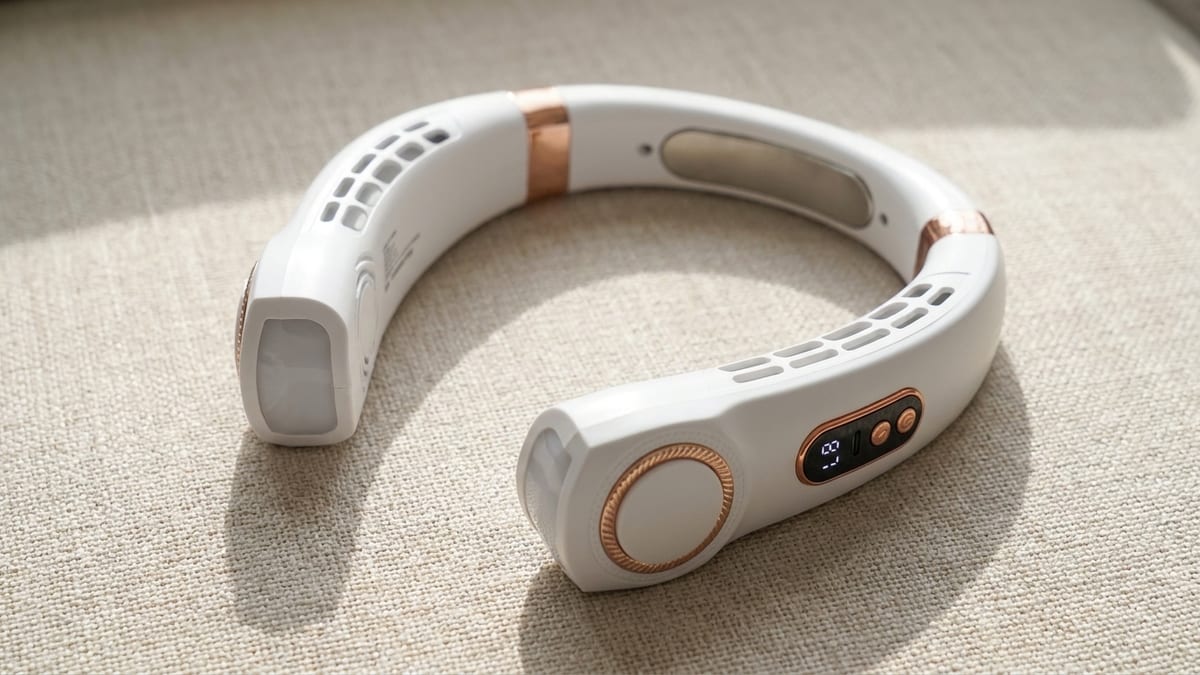
If you have shopped for a neck fan lately, you have seen two very different designs at similar prices, and the product photos do not always make the difference obvious. One has small spinning blades you can see. The other has smooth arms with air vents and nothing visibly moving. That single design choice changes how the fan feels to wear, how loud it is, and whether it plays nicely with long hair. Here is how the two compare, honestly.
What is a bladed neck fan?
A bladed neck fan is the older, cheaper design. Each arm holds a small exposed fan blade, like a tiny desk fan turned toward you. It works, and it is usually the least expensive option on the shelf. The trade-off is that those open blades sit right next to your neck and hair.
What is a bladeless neck fan?
A bladeless neck fan hides the moving parts. A small turbine pulls air in and pushes it out through rows of narrow side vents, so there is strong airflow but nothing spinning that you can touch. The name is a little cheeky, there is still a fan inside, but from the outside there are no exposed blades at all.
The honest side-by-side
| Bladed neck fan | Bladeless neck fan | |
|---|---|---|
| Catches long hair | Often | No |
| Noise | Tends to be louder | Quieter, often under 30 dB |
| Airflow | Two focused spots | Wider, wraparound vents |
| Safe around kids | Exposed blades | Nothing exposed |
| Price | Usually cheapest | Slightly more |
| Feel | More "gadget" | More like an accessory |
Where bladed fans still make sense
Let us be fair. If you have short hair, you are on a tight budget, and you mostly want a quick blast of air in the backyard, a bladed neck fan can do the job for a few dollars less. There is nothing wrong with buying the cheaper tool if it fits your life.
Where bladeless wins
For most people, though, the bladeless design is worth the small step up in price, for three reasons:
- Hair. This is the one buyers regret ignoring. If your hair reaches your shoulders, exposed blades will find it. A bladeless fan never does.
- Noise. A quieter fan is one you will actually wear on calls, in meetings, and in bed, which is most of when you want it.
- Comfort. Wraparound airflow and a smoother shape make it feel less like a gadget clamped to your neck and more like something you forget you are wearing.
The verdict
If price is the only thing that matters and you have short hair, a bladed neck fan is a fine budget pick. For everyone else, a bladeless neck fan is the better buy, and the gap is not large. You are paying a little more to avoid the two complaints people have about neck fans, snagged hair and noise, while getting better airflow in the bargain.
Frequently asked questions
Is a bladeless neck fan actually bladeless? Not literally. There is a small enclosed turbine inside. What "bladeless" means is that there are no exposed blades on the outside, so nothing spinning can reach your hair or fingers.
Is bladeless worth the extra money? For most people, yes. The main reasons are hair safety and lower noise, which are exactly the things that decide whether you keep wearing it or leave it in a drawer.
Do bladeless fans move less air? No. A good bladeless design pushes strong airflow through its vents. Many people find the wraparound air feels stronger than a bladed fan's single stream.
Which is quieter? Bladeless, generally. The better models run under 30 decibels on low, quiet enough for meetings and sleep.