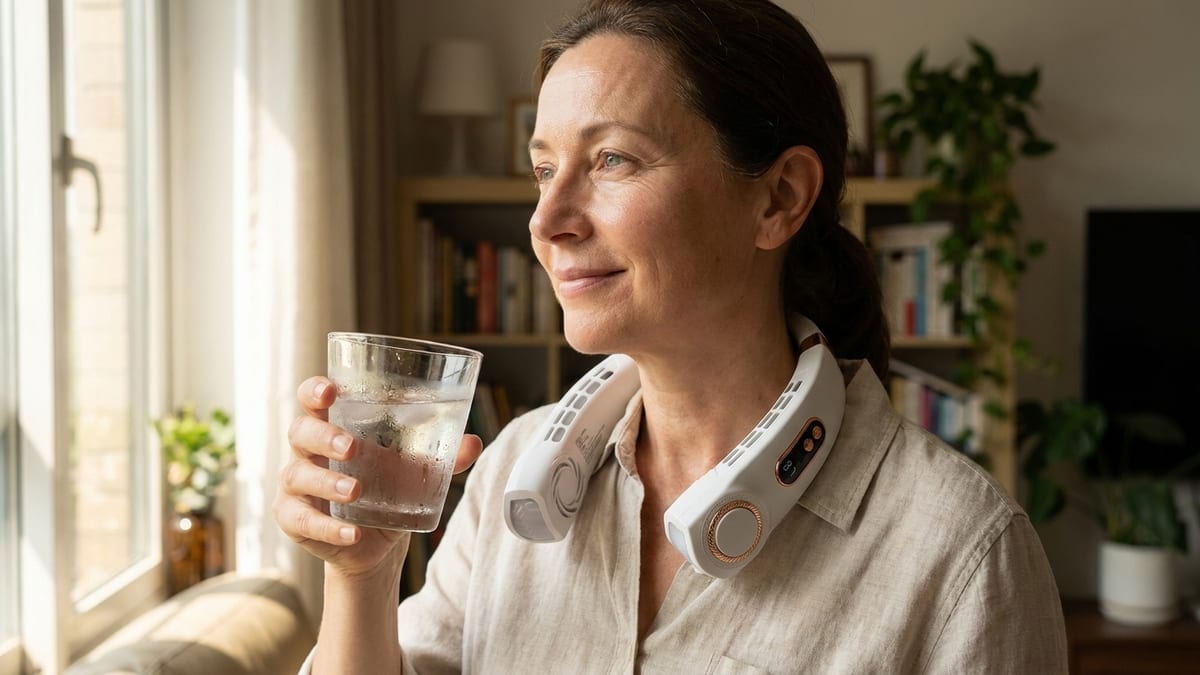
A hot flash does not check your calendar. It arrives in the middle of a meeting, on a packed train, halfway through dinner, or at 3 a.m. when you have finally fallen asleep. Within seconds your face is flushed, your neck is damp, and the one thing you want is a rush of cool air on your skin. The trouble is that you rarely control the thermostat in the moment you need to.
That gap, between when a flash hits and when you can actually cool down, is exactly where a personal fan earns its place. This guide covers what genuinely helps during a hot flash, why a hands-free neck fan suits this problem better than most alternatives, and what to look for so you do not waste money on one that disappoints.
First, what actually helps during a hot flash
Hot flashes are common. They affect more than 75 percent of women during menopause, and for many they last for years rather than months. Because they are so common, the practical advice for managing them is well established. Major health bodies, including the Mayo Clinic and The Menopause Society, point to the same first-line, non-medical steps:
- Keep your surroundings cooler. Open a window, lower the room temperature, and keep cool air moving with a fan.
- Dress in light layers you can remove quickly.
- Learn and avoid your triggers, which often include caffeine, alcohol, spicy food, and stress.
- Sip cold water when a flash begins.
None of this is a cure. If your hot flashes are frequent or severe, that is a conversation to have with your doctor, who can discuss options that go beyond comfort measures. What the list above does is buy you relief in the moment, and "keep cool air moving with a fan" is the part you can carry with you.
One honest note before we go further: a fan is a comfort tool. It cools your skin, which feels wonderful during a flash, but it does not treat the underlying cause. Think of it as the most portable version of the advice above, not a medical device.
Why a hands-free neck fan fits hot flashes so well
Plenty of fans move air. The reason a wearable neck fan suits hot flashes specifically comes down to when and where flashes actually happen.
- They happen when your hands are busy. You cannot always hold a handheld fan to your face while you are typing, driving, cooking, or pushing a cart. A neck fan sits on your shoulders like a pair of headphones and cools you while your hands stay free.
- They happen where you cannot control the room. A desk fan is useless on the bus or in someone else's office. Something you wear goes everywhere you go.
- They happen in quiet places. A flash in a meeting or in bed calls for cooling you can switch on without announcing it to the room. Quiet operation matters more here than for almost any other use.
- They happen without warning. The value is instant air the second you feel one starting, not five minutes later once you have found an outlet.
What to look for in a neck fan for hot flashes
Not every neck fan is built for this. Here is a short checklist that actually matters for flash relief, roughly in order of importance.
- Truly hands-free and comfortable. It should rest on your shoulders and stay put without you holding or adjusting it. Light weight matters if you plan to wear it for long stretches.
- Quiet. Look for a low decibel rating so you can wear it on calls, in meetings, and in bed. A loud fan gets left in a drawer.
- Strong, wraparound airflow. A flash warms your neck and face, so airflow that reaches both, rather than a thin stream in one spot, gives faster relief.
- Bladeless design. Older neck fans use small exposed blades that can catch long hair. A bladeless fan moves air through side vents with nothing spinning that your hair can reach, which also makes it safer around grandchildren.
- Battery that lasts the day. If you keep it on at a low speed for background comfort, you want hours of runtime and simple USB-C charging.
- A discreet look. You are far more likely to actually wear it if it looks like a modern accessory rather than a gadget.
How the common options compare
| Option | Hands-free | Quiet for meetings | Cools neck and face | Goes everywhere |
|---|---|---|---|---|
| Handheld fan | No | Usually | One spot | Yes |
| Desk or clip fan | Yes | Varies | One spot | No |
| Bladed neck fan | Yes | Often noisy | Partly | Yes |
| Bladeless neck fan | Yes | Yes | Yes, all around | Yes |
Handheld fans are cheap and fine at home, but they fail the moment your hands are full. Desk fans are great at your desk and nowhere else. Bladed neck fans solve the hands-free problem but tend to be louder and can grab hair. A bladeless neck fan is the option that checks every box for flash relief, which is why it has become the default recommendation for this specific problem.
Getting the most out of it
A few habits make a personal fan far more useful than just owning one:
- Keep it within reach where flashes hit you. One on the nightstand, one at your desk, one in your bag. The point is that it is already there when a flash starts.
- Run it low for prevention, high for relief. A gentle background breeze can head off the worst of a flash. A stronger burst brings you back down when one hits hard.
- Stack it with the basics. Pair it with light layers and cold water, and keep avoiding your known triggers. The fan handles the moment. The habits reduce how often the moment comes.
The bottom line
You cannot always lower the temperature of the room you are in, but you can carry your own cool air. For hot flashes, the fan that makes the most sense is one that is hands-free, quiet, bladeless, and wraps cool air around your neck and face on demand. That combination is what turns "I need air right now" into a problem you have already solved.
For persistent or severe symptoms, please talk to your doctor. For the day-to-day comfort of getting through each flash, a good neck fan is one of the simplest upgrades you can make.
Frequently asked questions
Does a neck fan actually help with hot flashes? It helps with the discomfort of a flash by cooling your skin on demand, which is the same principle behind the standard advice to keep cool air moving. It does not treat the cause, so think of it as fast, portable comfort rather than a treatment.
Is it quiet enough to wear in meetings or in bed? The better bladeless models run quietly at low speed, which is what makes them practical for offices, calls, and sleeping. Check the decibel rating before you buy.
Will it catch my hair? A bladeless neck fan will not, because there are no exposed spinning blades. Older bladed designs can, especially with long hair.
How long does the battery last? It depends on the speed. Running low for background comfort can stretch to most of a day on the better models, with quick USB-C charging.